A Safer Home Setup for Stun Gun Storage and Battery Care

Creating a Safe Storage Plan for Stun Guns

When it comes to self-defense tools like stun guns correct storage is important for both safety. How well the device works. The main problem is figuring out where to put these tools when they are not being used. An easy place might be a drawer near the bed, which's easy to reach but could be gotten to by children or others who should not have access. Another option could be a cabinet, which is safer but might be hard to reach leading to not using the device or not checking it often. A good storage plan works with the environment and the people living in the space making sure it is both easy to get to and safe.

Think About Who Lives With You

Before you decide where to keep the stun gun think about who could get to it and how much they know about what it's for. Family members, visitors and even animals can all affect your choice. For example a high shelf might seem safe. If a child can climb it is not safe anymore. A simple drawer might not be safe if someone can get the key or the combination easily. It is better to pick an area that only trusted adults can get into and make sure the key or the way to open it is not easy to find.

Remember that things can change. For example if you have guests or a child comes to visit your safety needs might change. Home safety is something that needs to be thought about all the time and requires plans that can change as needed.

Choosing the Right Storage Box

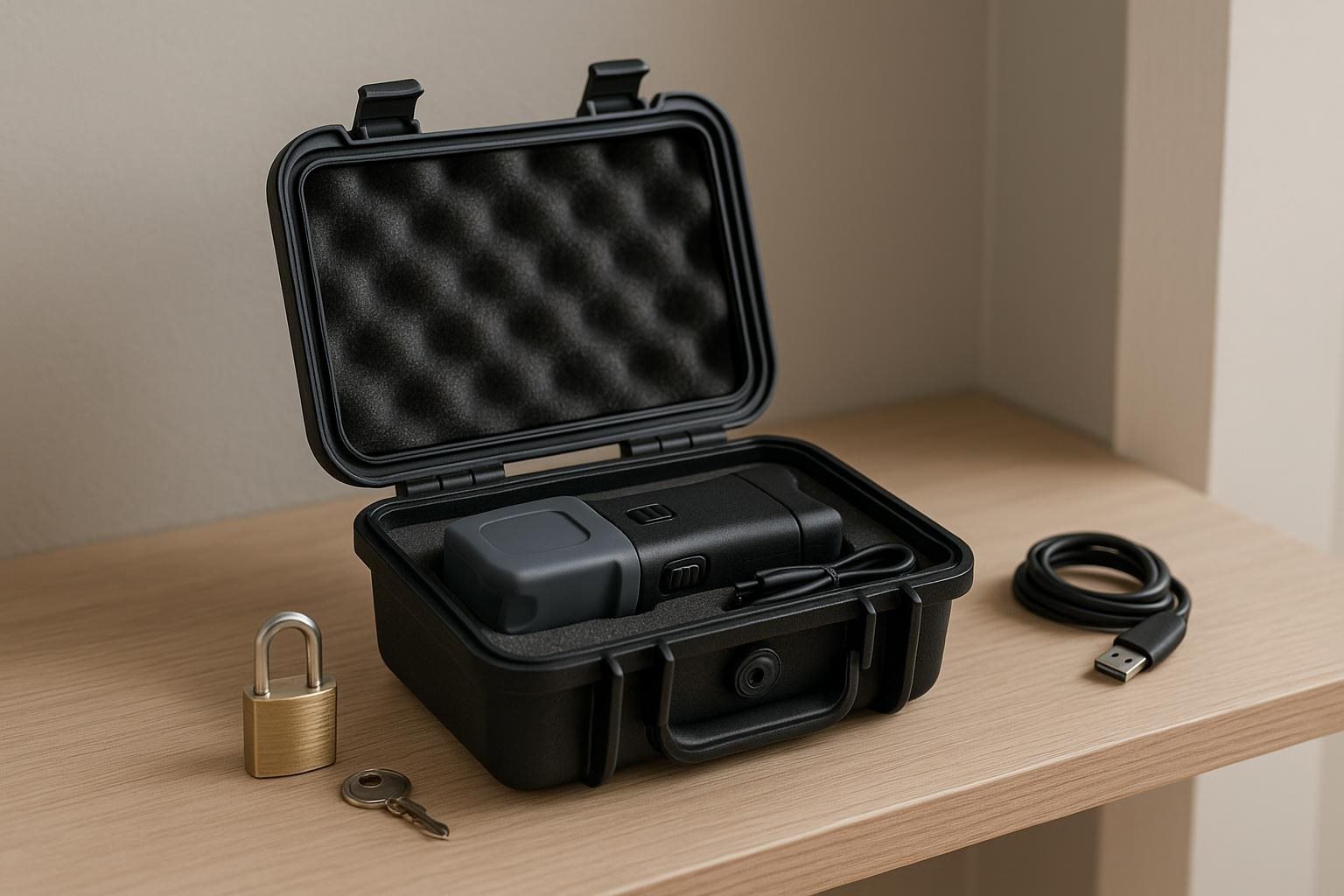
The box you choose for the stun gun should do more than just hide it. It should also stop it from being turned on by accident and protect it from things in the environment. A good box keeps it away from water and heat. Makes sure the buttons do not get pushed by things nearby that could turn it on by mistake.

Using a case, bag or compartment made for the stun gun is important. If the maker gives a cover or a lock always use them as told. Stay away from putting the stun gun near things that can carry electricity like keys or coins which can be dangerous. Places like bathrooms or garages-where the temperature changes a lot-should be avoided because they can hurt the device.

A locked box doesn't need to be a safe but it should stay closed when no one who is allowed is around. A complicated lock might make people forget to lock it. So choose a strong lock and make sure the box is placed where it can be checked often without being in a risky place.

A New Way to Handle Charging

How you charge the stun gun is another part of keeping it safe. Even if the stun gun is in a box it can still be dangerous if you charge it in a bad place like on a bed or near things that can catch fire.

Always follow the makers instructions for charging. Charge the stun gun on a non-flammable surface where it can cool down. Keep furniture or fabric away from the charger and don't leave the device alone unless the maker says it is okay. Check the cables too; they should not be in the way where someone could trip. If the device shows any signs that it is not working right- like getting too hot the battery getting bigger, looking broken or having a smell-stop using it right away and get help from a professional.

Also don't think the device is ready to use just because the lights are on. Look in the manual for how to check it and how to charge it. Always be careful with cables or batteries because they can be dangerous.

Make Sure to Check

Having a regular check for the stun gun can help keep everyone safe. These checks should be done in an controlled way. It is not safe to test the stun gun on anyone, including pets or in places where people're to see if it works. That kind of action can lead to accidents.

Instead when you check look closely at the outside of the device. How it is stored. Check for cracks, rust, any smells or signs of getting too hot. Make sure the lock works right. It is also important to look at the home again- is it still safe for kids and are visitors kept away? If something looks wrong stop using the device. Get help from the maker instead of trying to fix it yourself.

To stay on top of it a helpful list for checking might include the following:
– Is only allowed people able to get it?
– Is the device protected from conditions?
– Are the charger and battery not damaged or too hot?
– Is the lock and box still working?
– Have things in the home changed that need a place to store it?

Know Your Legal Responsibilities When You Take It With You

Your way of storing the stun gun can also mean legal problems especially if you take it out of your home bring it to another place or take it on a plane. Rules about stun guns are different in places and can change so it is important to do your research.

Before you buy or move the device learn about the rules in your area. Also remember that extra rules might be in schools, work or on transport so it is important to ask for legal advice instead of just trusting what a store says. Laws about storing it in one place might not work in another.

If you are not sure about the laws don't think that knowing about the device is enough to get you through anywhere. Take the time to find out the model and check the rules. Being means making sure your way of storing it does not cause problems for your home or legally.

In conclusion a safe and good way to store the stun gun should fit what is happening in your home keep the device safe, from damage let you check it easily and follow the laws. Make sure to think about these things when things change in your home or if anything shows that you need to change your plan.
The Pre-Range Inspection Routine That Prevents Avoidable Problems

A range trip can go wrong before the vehicle even leaves the driveway. A forgotten magazine, a device battery, a damaged eye-protection lens or a firearm that was never checked after the last outing can turn a simple plan into a wasted one. A short pre-range inspection catches these problems while there is still time to fix them. The goal is a repeatable pause between storage and transport with safety and lawful use guiding every decision.

Start with a uncluttered inspection area

Choose a well-lit place away from distractions, children and pets. Keep ammunition from the firearm during inspection. Follow the handling rules every time: point the muzzle in a safe direction keep your finger outside the trigger guard and treat the firearm as loaded until you have personally verified its condition.

Use the procedure in the firearm's owner manual. Follow the range's rules. Confirm that the action is open where appropriate then visually and physically verify the chamber and magazine area. Stop if anything feels unfamiliar. Do not guess about loading, unloading or function; ask an instructor range safety officer or gunsmith.

Use the caution with other equipment. Handle a stun gun only when it is switched off and secured against activation. Inspect its casing, controls, contact points and battery compartment without pressing or testing it against any person, animal or surface. If it is cracked wet unusually warm, corroded or behaving unpredictably set it aside for evaluation than carrying it as a backup.

Look for signs of damage

Start with a visual inspection. Check for parts, bent components, damaged grips, unusual wear, corrosion, debris and moisture. Pay attention to changes since the equipment was stored. A scratch may be cosmetic. A crack near a control, grip or moving part warrants a more cautious decision.

For firearms examine the exterior and the areas identified in the owner's manual for cleaning and inspection. Do not disassemble beyond your training or the manufacturer's instructions. A stiff control, resistance, missing fastener or part that does not sit correctly is a reason to stop-not to use force or improvised tools.

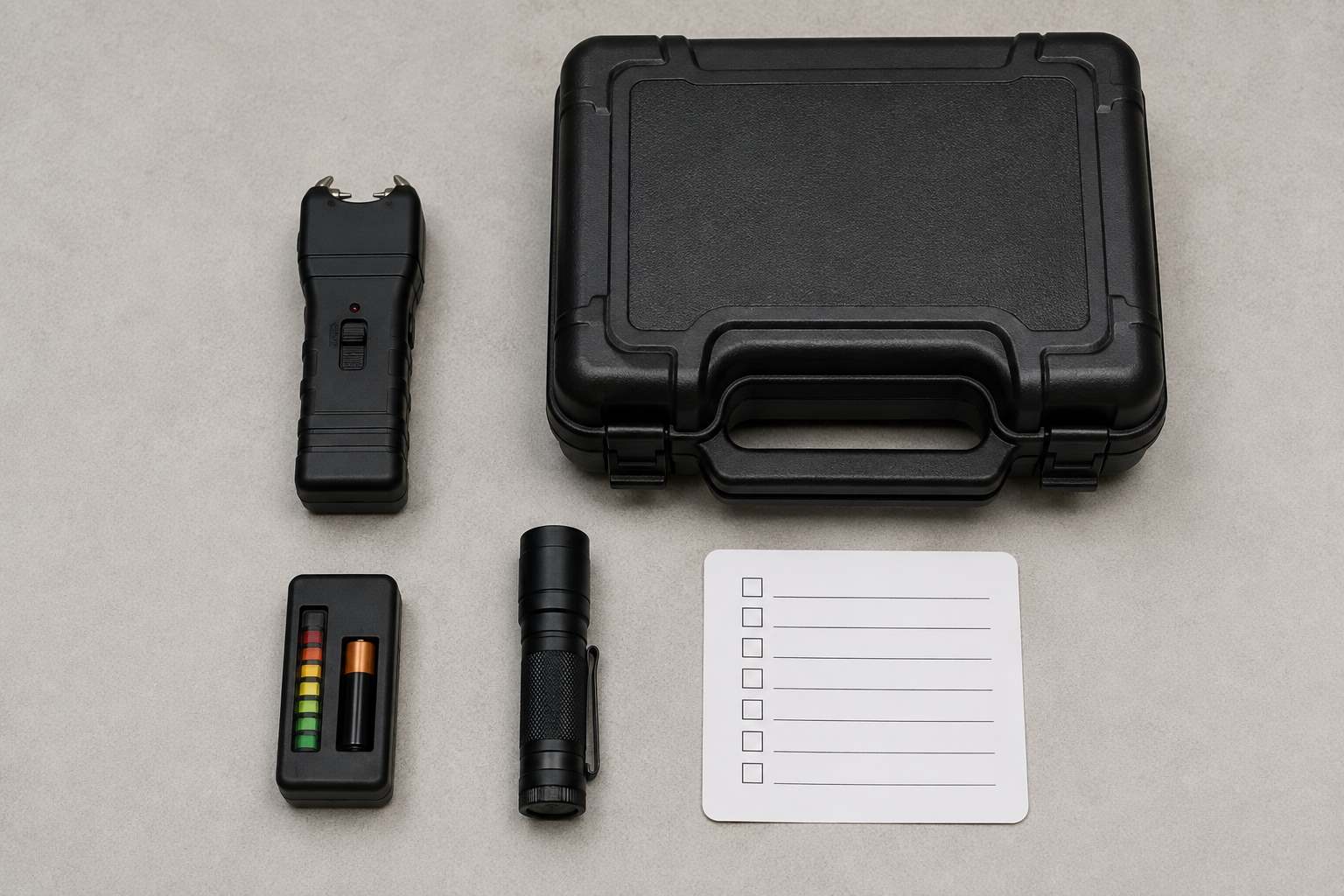
For self-defense equipment check the battery indicator if the model has one but do not treat it as proof that the device is reliable. Batteries can drain during storage and contacts can corrode in conditions.. Recharge batteries according to the manufacturer's instructions then store the device to prevent accidental activation. Do not modify a battery compartment, switch or output system to gain power or change how the equipment operates.

Decide what needs maintenance before the trip

A looking item is not necessarily ready for use and a little dirt does not automatically require aggressive firearm cleaning. Follow the owner's maintenance schedule and procedures. If you cannot identify the lubricant, cleaning method or inspection point pause and seek qualified help instead of copying an unverified internet tip.

Separate routine maintenance from troubleshooting. Cleaning may be appropriate when the equipment is unloaded and the manual supports it. A failure to feed, failure to fire, unusual sound, damaged cartridge, unexpected electronic discharge or repeated malfunction requires a conservative response. Keep the item pointed in a direction maintain control and follow the manufacturer's safety procedure or ask range staff for assistance. Do not continue firing or repeatedly activate a device to see whether the problem disappears.

This is also where buying decisions become practical. If equipment repeatedly needs work lacks instructions or no longer suits your storage and training habits replacement may be safer than another accessory or modification. Favor products with manuals, visible condition indicators and controls you can operate without confusion. A lower purchase price is not a saving if the item is difficult to inspect, maintain or store responsibly.

Pack for control not convenience

A checklist earns its place when it prevents rushed decisions. Keep it short to use every time:

– Unloaded firearm or safely secured device checked according to its manual
– Separate properly stored ammunition where applicable
– Eye and hearing protection in good condition
– Required range documents, membership information or identification
– Empty case, lock or other transport equipment required by current rules
– Charged phone, water and basic personal items
– Maintenance supplies permitted by the range
– A plan for stopping if equipment behaves abnormally

Adjust the list to the range, equipment and people attending. Do not pack a damaged item simply because no replacement is available. If the range prohibits equipment, ammunition or maintenance activities its current policy controls your preparation. Laws and transport requirements can change, so check guidance from relevant official authorities and the range before departure instead of relying on an old habit.

Make the decision before loading the vehicle

Ask one question: is every item safe, serviceable and lawful for this trip? If the answer is uncertain leave it behind until the uncertainty is resolved. You may need to borrow approved gear postpone practice or arrange a professional inspection. A cancelled session is inconvenient; managing equipment around other people creates a risk that is harder to undo.

At the range continue the discipline. Follow posted commands keep equipment pointed safely handle it in designated areas and ask the range safety officer when a rule or procedure is unclear. Responsible range practice is less about having a kit than recognizing when not to use it. A repeatable pre-range inspection gives you that decision point, before pressure, noise and other shooters enter the picture.